Can Thermal Labels Withstand Alcohol, Sanitizers, and Cleaning Chemicals?
Some thermal labels can withstand alcohol, sanitizers, and cleaning chemicals, but standard direct thermal paper should not be assumed to do so. Resistance depends on the facestock, protective topcoat, printing method, ribbon, adhesive, chemical formulation, concentration, contact time, wiping pressure, and required label life. A label described as moisture resistant may still fail after repeated alcohol wipes.
Define the real exposure before selecting media. An occasional splash that is blotted immediately is different from a daily disinfecting routine, prolonged contact with a soaked wipe, or immersion. The printed image, white background, adhesive bond, and barcode scan quality must all survive. Testing only whether the label remains physically attached gives an incomplete answer.
Why Are Direct Thermal Images Vulnerable?
Direct thermal paper contains a heat-reactive imaging layer. Solvents, oils, plasticizers, and some cleaning ingredients can interact with the coating, causing darkening, fading, smearing, or loss of contrast. A protective topcoat improves resistance to selected exposures but does not make every direct thermal product chemically resistant. For critical identification, request the exact resistance data for the named material rather than relying on a general product category.
When Is Thermal Transfer the Safer Choice?
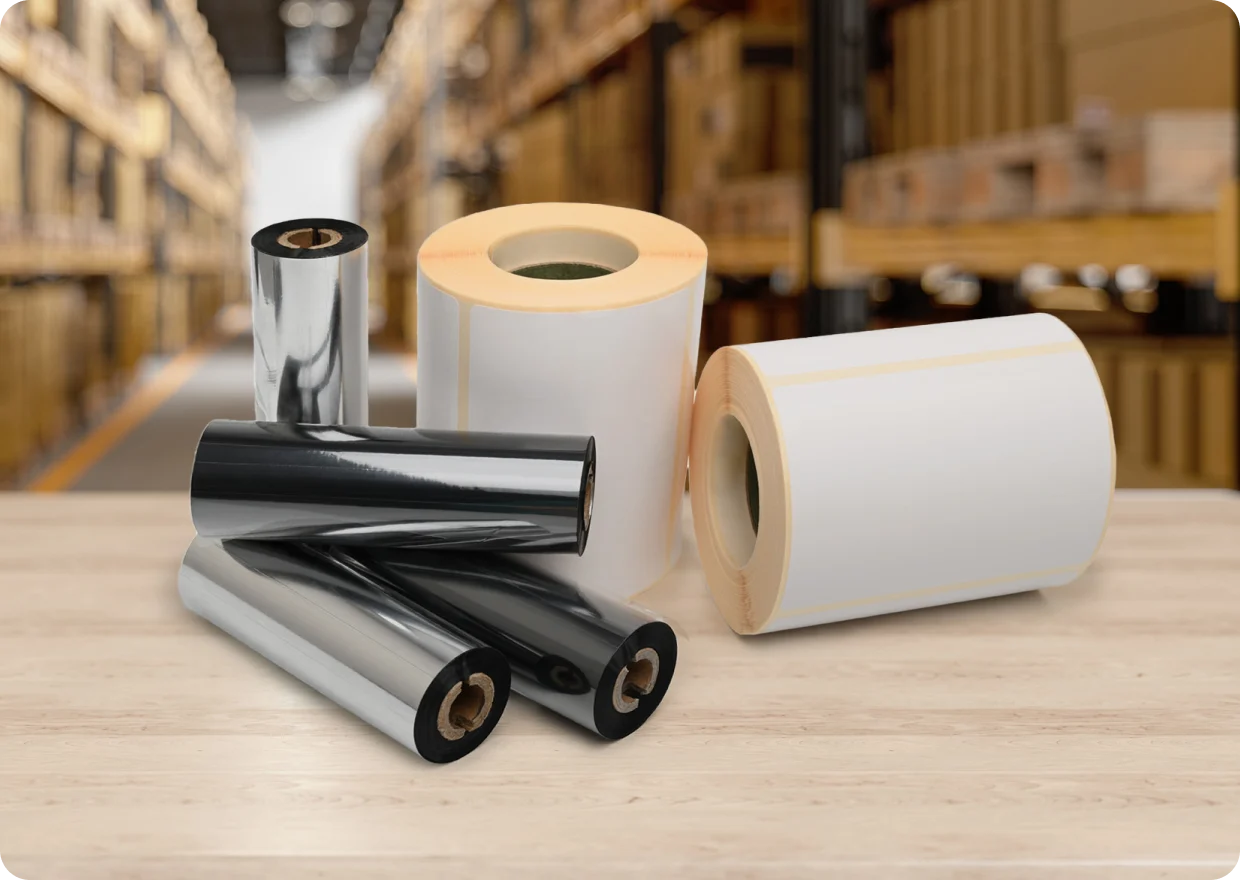
Thermal transfer printing places ribbon pigment onto paper or synthetic facestock. A synthetic label paired with a compatible resin ribbon usually offers stronger resistance to abrasion, moisture, and many chemicals than standard direct thermal paper. Wax and wax-resin ribbons may be suitable for less demanding exposure, but the ribbon and face must be qualified as a system. High printer darkness cannot compensate for an incompatible ribbon.
Alcohol Is Not One Uniform Test
Ethanol and isopropyl alcohol may be used at different concentrations and may include water, fragrances, dyes, or other additives. Hand sanitizer gels can remain on a label longer than a quick liquid wipe. A product that survives one pass with diluted alcohol may fail after repeated cleaning. Record the brand or formulation, concentration, wipe material, wetness, number of cycles, and time between cycles when testing.
Sanitizers May Contain Other Active Chemicals
Cleaning programs can use quaternary ammonium compounds, chlorine-based products, peroxide, ammonia, detergents, or mixed formulations. These materials affect coatings, print, and adhesives differently. Never infer resistance to one chemical from resistance to another. Obtain the current safety data and use instructions for the cleaning product, then share the relevant exposure details with the label manufacturer while following workplace safety procedures.
Do Not Forget the Adhesive
A face and printed image may remain readable while liquid reaches the edges and weakens the adhesive. Curved containers, small diameters, textured plastics, and low-surface-energy surfaces increase the risk of lifting. Apply samples to the actual cleaned container and allow the specified dwell time before exposure. Inspect for edge lift, sliding, adhesive softening, and residue as well as complete detachment.
Build a Practical Wipe Test
Use appropriate protective equipment and follow the chemical manufacturer’s handling instructions. The test should reproduce normal cleaning rather than create an undefined laboratory challenge.
- Print the final text and barcodes using normal production settings.
- Apply labels to real containers and allow the intended dwell time.
- Expose control and test samples to the exact cleaning product.
- Repeat the normal wiping force and cycle count over the expected label life.
- Inspect, scan, photograph, and record results after each interval.
How Should Failure Be Judged?
Set acceptance criteria before the test. Reject a construction if the barcode no longer scans reliably, human-readable text becomes ambiguous, the background darkens enough to reduce contrast, the print transfers to the wipe, or the label lifts beyond the permitted limit. For regulated or safety-critical labels, use the organization’s validated protocol and barcode verifier rather than a casual phone scan.
Can Lamination Solve the Problem?
A compatible overlaminate can shield printed information from wiping and abrasion, but it adds material, cost, thickness, and application steps. Liquid may still enter at unsealed edges, and lamination does not correct an unsuitable adhesive. The laminate must not create glare or distortion that impairs barcode reading. For on-demand variable data, confirm whether lamination occurs after printing and whether the workflow can apply it consistently.
What Should You Ask the Supplier?
Provide the exact chemical, concentration, exposure method, cycle count, surface, temperature, label life, printer, and required barcode grade. Compare thermal labels only after those conditions are defined. Ask the label supplier whether published resistance results cover the complete face-ribbon-adhesive construction and request samples from the same proposed specification for an in-use trial.
Which Construction Should You Choose?
Use standard direct thermal paper only when exposure is light and testing confirms adequate life. Choose top-coated direct thermal media for improved resistance when ribbon-free printing remains important. For frequent sanitizing, strong solvents, or long-term identification, evaluate thermal transfer synthetic media with a matched resin ribbon. The final decision should be based on recorded pass criteria under actual cleaning conditions, not on the word durable alone.
How Do Temperature and Contact Time Change Resistance?
Chemical interaction often accelerates with heat and longer wet contact. A wipe that evaporates quickly at room temperature may remain on a label inside a cold room, beneath a container lip, or under a glove. Test at the actual service temperature and include the longest credible wet period. If containers are cleaned while warm, include that condition as a separate challenge rather than averaging it with normal use.
Allow printed labels to condition for the normal period before exposure. Thermal transfer images and pressure-sensitive adhesive bonds may perform differently immediately after printing and application than after a full dwell. Record the interval so a supplier can reproduce the test. Keep an unexposed control sample stored under the same temperature and lighting for a fair comparison.
What About Healthcare, Laboratory, and Food Applications?
In controlled environments, label failure can affect traceability or safety. Follow the organization’s validated cleaning procedure and any applicable material, migration, or identification requirements. Do not assume that chemical resistance means suitability for direct food contact, medical devices, blood bags, or laboratory specimens. Those applications may require separate compliance documentation, low-temperature performance, sterilization resistance, or evidence for the specific container and process.
How Should Results Be Documented?
Create a simple record containing the label lot, facestock, adhesive, ribbon, printer settings, substrate, cleaning product, concentration, wipe count, dwell time, temperature, photographs, and barcode result. Note partial failures instead of writing only pass or fail. This record prevents a future reorder from substituting a visually similar construction that has never been tested against the same chemical exposure.