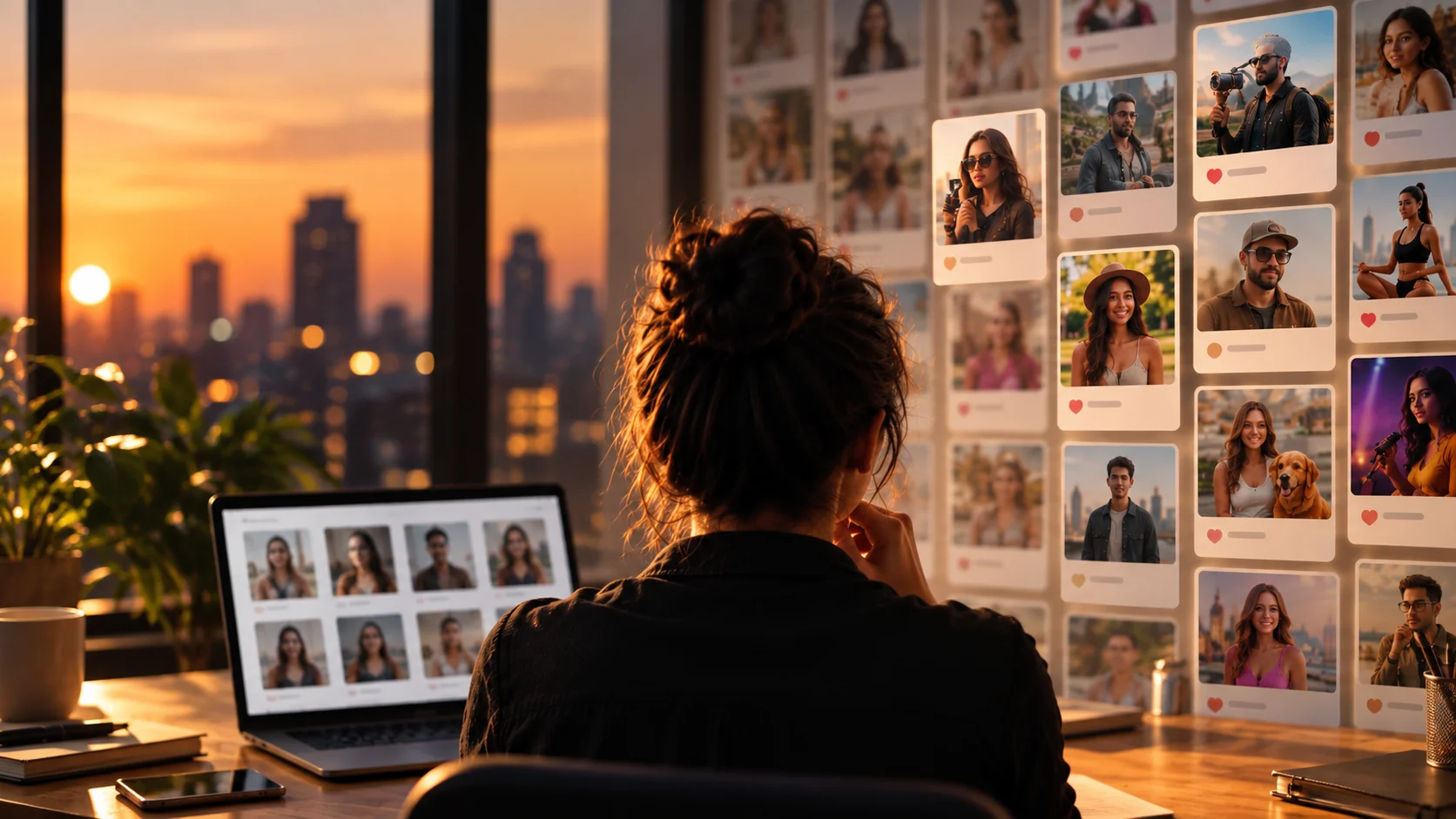
You post a clip. It does numbers. Three weeks later a skincare brand lands in your DMs like it’s been following you since day one. Feels random, right? Mostly it isn’t. Behind a lot of those moments is a marketer with a filter panel open, a shortlist half built, and a very specific question: who is already talking to the people we want to reach?
If you’re a creator, it’s worth knowing how that process works. If you’re a brand trying to find influencers for your brand without burning a month on it, it’s worth knowing too. So let’s pull back the curtain.
The four ways brands go looking
Skim through any influencer marketing hub or the average roundup of influencer marketing websites and you’ll find the same handful of routes.
- The scroll-and-save. Someone on the brand team browses hashtags, screenshots profiles, and dumps them into a spreadsheet. Still very common. Also very slow.
- The marketplace. An influencer marketplace works a bit like a job board. Creators sign up and build a profile, brands browse and send offers. Handy, but you only get found if you’ve signed up.
- The database. An influencer finder built on a big database doesn’t need you to register anywhere. Tools like Influenze.ai say they build profiles from publicly available activity on Instagram, YouTube and TikTok, across 450M+ profiles. That’s often the answer to “how did they even find me?”
- The agency. Agencies and influencer marketing services do the hunting and the negotiating on a brand’s behalf. Plenty of them run their own research on database tools first, so the route often leads back to number three.
What the person on the other side actually sees
Here’s the bit most creators never get to peek at. When a marketer opens your profile in a research tool, they’re not just looking at your follower count. They’re looking at things like:
- Your engagement rate, compared with others in your size bracket
- Your audience: age, gender, top countries, even interests
- Follower quality, meaning how many followers look real versus suspicious
- Your growth over the last few months
- A rough price estimate for a reel, post or story (in Influenze’s case, labelled as a beta estimate built from followers, engagement and audience data)
So yes, the numbers matter. But notice that most of them are about how real and engaged your audience is, not how big.
Why small creators have more going for them than they think
The usual size brackets go: nano (1K to 10K followers), micro (10K to 50K), mid-tier (50K to 100K), macro (100K to 1M) and mega (1M+). Plenty of brands lean towards micro influencer marketing because smaller creators tend to have tighter niches and audiences that actually talk back. Even the tool’s own guidance notes that engagement tends to taper as accounts get bigger. Curious what each tier charges? Here’s a breakdown of nano, micro and macro influencer rates.
That doesn’t mean small always wins. It means a clean 20K account with a clear lane can be more attractive to the right brand than a 300K account that does a bit of everything.
Five things you can do tomorrow
- Pick a lane and say it out loud. Research tools let marketers search by bio phrase, topic and interest. If your bio says what you actually make, you’re easier to find.
- Keep your numbers honest. Bought followers and engagement pods are exactly what vetting tools try to flag. A smaller real audience beats a bigger shaky one.
- Make yourself easy to contact. Put a business email in your bio. Brands can unlock contact details through some platforms, but a direct line saves everyone time.
- Know your own stats. Engagement rate, audience split, top countries. If you know them first, you can negotiate from facts.
- Don’t undersell. Brands may have a rough price range in front of them before they ever write to you. Know your worth and your rate card.
And if you’re the brand
The same logic works in reverse. Start from the customer, not the follower count. Look for creators whose audience matches yours, check engagement and follower quality, and build a shortlist you can actually defend to your boss.
The takeaway
Brands aren’t picking creators out of thin air anymore. They’re filtering, comparing and shortlisting, often with tools you’ve never heard of. The more you understand what they’re looking at, the better you can show up.