Comparison of Spread Spectrum and Narrowband Communication Technologies: Pros, Cons, and Use Cases
I. What are Spread Spectrum and Narrowband Communication?
Spread Spectrum Communication
The core concept of spread spectrum communication is “trading bandwidth for performance,” which differs from traditional designs that prioritize spectrum conservation. Using pseudo-random coding, signal energy—originally concentrated in a narrow band—is dispersed and transmitted across a much wider frequency band; the receiver then uses specialized demodulation algorithms to reconstruct the original data.
This technology effectively filters out narrowband interference and offers strong anti-interference capabilities and communication privacy. Because the power spectral density of spread spectrum signals is very low—often blending into background noise—they are difficult to detect or intercept, ensuring a high level of communication security. Wi-Fi, Bluetooth, and 4G/5G are all communication methods based on spread spectrum technology.
Narrowband Communication
Narrowband communication is a classic wireless communication method that employs a narrow frequency band and an energy-concentrated transmission architecture, focusing RF energy within a very narrow, fixed band to facilitate data exchange.
This technology features simple circuitry and is highly mature, offering high spectrum efficiency, low hardware costs, and extremely low power consumption. The concentrated signal energy provides good signal penetration and transmission range, making it suitable for lightweight wireless transmission scenarios involving simple commands, small data volumes, and infrequent communication.
II. Key Characteristics of Spread Spectrum vs. Narrowband Communication
- Anti-interference Capability: Spread spectrum communication offers strong resistance to multipath interference, making it suitable for complex electromagnetic environments; narrowband communication has weak anti-interference capabilities, making it prone to packet loss and disconnections in complex environments.
- Concurrent Networking Capability: Spread spectrum communication supports CDMA-based multi-user concurrent networking, allowing a large number of terminals to be online simultaneously; narrowband communication is not suitable for large-scale, multi-terminal concurrent operations.
- Transmission Rate: Spread spectrum communication offers high transmission rates, supporting large data volumes and frequent data exchange; narrowband communication has very low transmission rates, supporting only byte-level, small-scale data exchange.
- Power Consumption: Spread spectrum communication is less efficient in power management than narrowband communication; narrowband communication enables extremely low standby current, allowing devices to achieve ultra-long battery life spanning several years. 5. Hardware and Cost: Spread-spectrum communication systems feature complex architectures and impose specific demands on hardware processing capabilities, resulting in higher R&D and deployment costs; conversely, narrowband communication technology is mature, easy to deploy, and entails lower hardware costs.
6. Communication Security: Spread-spectrum communication supports encryption mechanisms, offering resistance to interception and high levels of communication security; narrowband communication lacks such standardized security mechanisms.
III. Application Scenarios for the Two Technologies
Spread-Spectrum Communication Application Scenarios
Suitable for projects involving complex electromagnetic environments and high densities of terminal devices, where there are stringent requirements for communication quality and transmission rates.
Typical applications: Industrial workshops, urban areas, and complex outdoor environments; used in large-scale IoT systems requiring high-volume data transmission, multi-device networking, and frequent data interaction.
Narrowband Communication Application Scenarios
Suitable for lightweight projects characterized by low communication frequency, a need for ultra-long battery life, and cost sensitivity, where only small amounts of monitoring data need to be uploaded periodically.
Typical applications: Underground smart water meters, environmental monitoring sensors in remote mountainous areas, industrial sensors, remote key fobs, and remote control of small devices.
Note: Spread-spectrum communication and narrowband communication represent two mainstream wireless technology paradigms based on completely different principles. Each has its own advantages and disadvantages, serving specific roles in different operational scenarios; neither can fully replace the other.
IV. Ebyte Product Recommendations
Based on the technical characteristics of spread-spectrum and narrowband communication, operational requirements, and the compatibility of Ebyte products, we recommend industrial-grade RF modules for each technology path to suit various IoT wireless transmission projects. Specific product recommendations are as follows:
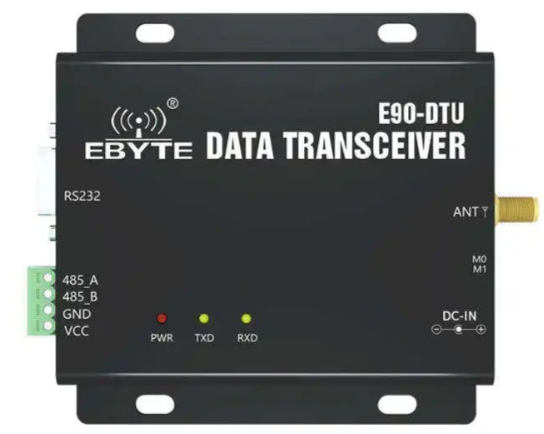
E90‑DTU (230SL37): Utilizes next-generation LoRa spread-spectrum technology and is equipped with the SX1262/SX1268 RF chip. It supports AES128 encryption, LBT (Listen Before Talk), and RSSI signal detection, offering excellent interference resistance and communication security. With a maximum transmit power of 44dBm and a maximum communication range of up to 70km, it is designed for ultra-long-range spread-spectrum transmission in outdoor settings, complex terrain, and high-interference environments. It is widely used in demanding scenarios such as hydrological monitoring, forest fire prevention, and data acquisition in remote mining areas.
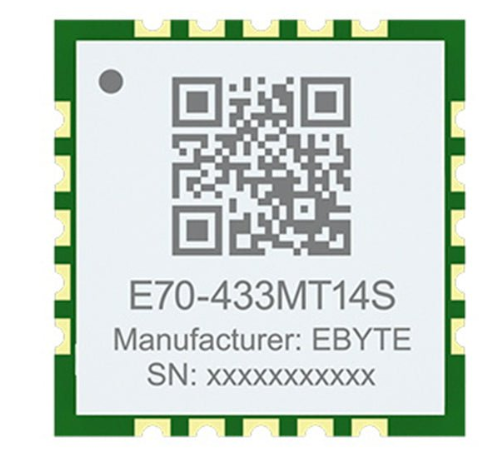
The E70-433MT14S features the TI CC1310 dedicated narrowband transceiver chip, offering concentrated energy, high spectrum efficiency, and ultra-low standby power consumption. It upholds the core advantages of narrowband communication—low power, long range, and low cost—while delivering excellent resistance to spurious interference. Suitable for various simple wireless transmission applications, it is widely used in scenarios highly sensitive to power consumption and cost, such as industrial sensors, remote key fobs, wireless intercoms, and remote control for small devices.