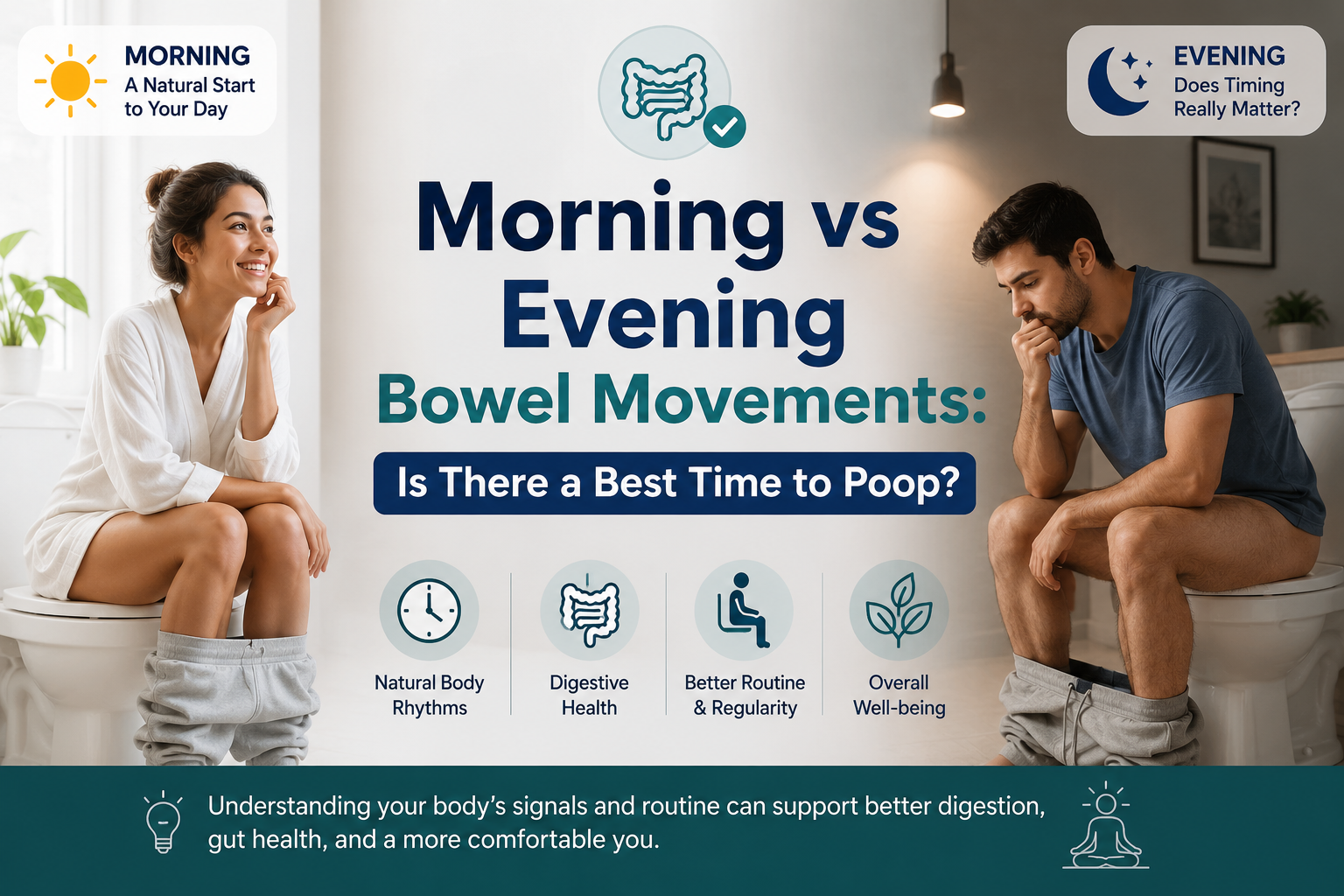
Morning vs Evening Bowel Movements: Is There a Best Time to Poop?
You can tell a lot about someone’s morning routine by what happens before they leave the house. Some people won’t start the day without coffee. Others won’t leave until they’ve walked the dog. For many Australians, a trip to the toilet is just as much a part of the routine. But what if your bowel movement doesn’t happen until the evening? Or your schedule changes from one day to the next? Does that mean something is wrong?
If you’ve ever searched for the best time to poop, you’re not alone. It’s a common question because bowel habits are closely linked to digestive health. While there isn’t a single “perfect” hour that works for everyone, your body does have natural rhythms that can make some times of the day more favourable than others.
Let’s look at what research says and what actually matters for healthy bowel habits.
Is There a Best Time to Poop?
For many healthy adults, the best time to poop is often in the morning, particularly after waking up or shortly after breakfast.
This happens because your digestive system follows a natural circadian rhythm. During sleep, movement through the colon slows down. After you wake, your colon becomes more active. Eating your first meal of the day stimulates what’s known as the gastrocolic reflex, a normal response that increases movement in the large intestine and may trigger the urge to have a bowel movement.
That said, not everyone follows the same pattern.
Some people naturally empty their bowels later in the day because of their work schedule, meal timing, physical activity, or individual body clock. As long as your bowel movements are regular, comfortable, and easy to pass, the exact time is usually less important than consistency.
What Is the Healthiest Time of Day to Have a Bowel Movement?
There isn’t a medically recognised “healthiest” time of day to have a bowel movement.
Instead, healthcare professionals focus on whether your bowel habits are regular and comfortable.
Healthy bowel habits generally include:
- Passing stools without excessive straining
- Feeling your bowel has emptied completely
- Having soft, well-formed stools
- Passing stools anywhere from three times a day to three times a week, which is widely considered a normal range for healthy adults
The healthiest time is simply when your body naturally signals it’s ready.
Ignoring that urge repeatedly may contribute to constipation because stool remains in the colon longer, allowing more water to be absorbed and making it firmer.
Why Do Most People Need to Poop in the Morning?
Morning bowel movements are extremely common because several normal body processes happen around the same time.
These include:
- Increased activity of the colon after waking
- The gastrocolic reflex triggered by breakfast
- Light physical movement such as walking around the house
- Warm drinks like coffee or tea, which may stimulate bowel activity in some people
This combination explains why many people naturally head to the bathroom within an hour of getting out of bed.
Is It Bad If I Only Poop at Night?
No.
Having bowel movements in the evening isn’t unhealthy on its own.
Some people consistently go at night because they eat their largest meal later, work night shifts, exercise after work, or simply have a different daily routine.
The important question isn’t when you go.
It’s whether your bowel movements are:
- Regular
- Comfortable
- Easy to pass
- Free from ongoing pain, bleeding, or significant straining
If you’ve always had evening bowel movements and feel well, there’s usually no reason for concern.
However, if your bowel habits suddenly change, or you develop persistent constipation, diarrhoea, blood in the stool, unexplained weight loss, or abdominal pain, you should seek medical advice.
Does the Time You Poop Affect Digestive Health or Constipation?
The timing itself has very little effect.
What matters more is whether stool stays in the colon longer than necessary.
When stool remains in the bowel for an extended period, more water is absorbed, making it harder and drier. This can make bowel movements more difficult and contribute to constipation.
Healthy digestion is supported by habits such as:
- Eating enough dietary fibre
- Drinking adequate fluids
- Being physically active
- Responding when you feel the urge to use the toilet
- Allowing enough time without rushing
Good toilet posture may also help some people empty their bowels more comfortably.
Using a folding toilet stool raises your knees above your hips, creating a position that straightens the anorectal angle. Research suggests this posture may reduce straining and make bowel movements easier for some individuals, although it is not a treatment for constipation on its own.
Can I Train My Body to Poop at the Same Time Every Day?
Yes, many people can encourage a more predictable bowel routine.
Simple habits include:
- Wake up at a similar time each day.
- Eat breakfast regularly.
- Drink water throughout the day.
- Allow enough time to use the toilet without rushing.
- Go when you first feel the urge rather than delaying.
- Maintain a comfortable toilet posture.
Consistency helps your digestive system establish a routine over time.
Why Toilet Posture Can Make a Difference
Toilet posture is often overlooked, yet it can affect how easily you empty your bowels.
Sitting with your knees slightly higher than your hips may help relax the muscles involved in passing stool and reduce the need to strain.
Many people use a toilet stool for this purpose as part of their daily bathroom routine.
If prolonged sitting causes discomfort, especially after childbirth, surgery, or haemorrhoids, a donut pillow seat may provide extra comfort while sitting. Likewise, a sitz bath may help soothe the area and support hygiene for certain conditions, as recommended by your healthcare professional.
Everyday Habits That Support Healthy Bowel Function
Looking after your digestive health doesn’t require complicated routines.
These everyday habits can help:
- Eat plenty of fruit, vegetables, legumes and wholegrains.
- Aim to meet your daily fibre needs.
- Drink enough water throughout the day.
- Stay physically active.
- Don’t ignore the urge to have a bowel movement.
- Allow yourself enough time in the bathroom.
- Consider using a toilet stool if it helps you feel more comfortable.
Small, consistent habits usually have a greater impact than trying to force yourself to go at a particular hour.
Final Thoughts
If you’re wondering about the best time to poop, morning is often the most common time because your digestive system naturally becomes more active after waking and eating breakfast. However, there is no single ideal hour that suits everyone.
The healthiest bowel routine is one that’s regular, comfortable, and doesn’t involve excessive straining. Supporting your digestion with enough fibre, fluids, movement, and good toilet posture can make a far bigger difference than watching the clock.
If you’re experiencing ongoing constipation, significant changes in bowel habits, or symptoms that concern you, it’s always worth speaking with your GP for personalised advice.
FAQs
What is the healthiest time of day to have a bowel movement?
There isn’t one healthiest time. Morning is common because the colon is naturally more active after waking and breakfast, but any regular, comfortable bowel routine can be healthy.
Is it bad if I only poop at night?
No. Evening bowel movements can be completely normal if they’re regular, comfortable, and not associated with constipation or other concerning symptoms.
Why do most people need to poop in the morning?
Your colon becomes more active after waking, and eating breakfast triggers the gastrocolic reflex, which encourages movement of stool through the bowel.
Can I train my body to poop at the same time every day?
Yes. Eating meals regularly, staying hydrated, responding to the urge to go, and following a consistent daily routine may help establish predictable bowel habits.
Does the time you poop affect digestive health or constipation?
Not usually. Regular bowel habits, adequate fibre intake, hydration, physical activity, and avoiding unnecessary straining are much more important than the exact time of day you have a bowel movement.